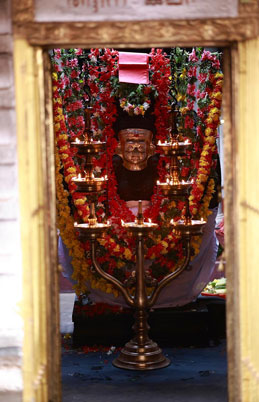
Nestled in a serene, nature-rich setting near the historic Kavalappara region, the Aryankavu Devi Temple stands as a timeless symbol of devotion, heritage, and ritual continuity. The presiding deity, Goddess Durga, is worshipped here in a rare and deeply symbolic form—enshrined in an open sacred grove (kaavu), where she remains directly exposed to sunlight and rain. This unique form of worship reflects the ancient Dravidian tradition of nature-centered spirituality, where divinity is inseparable from the elements.
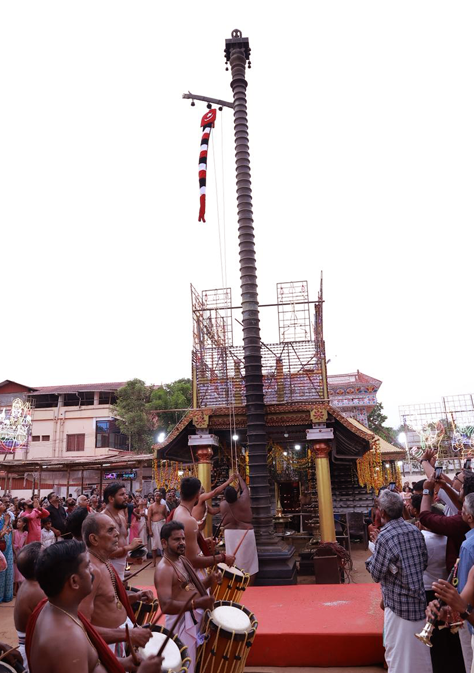
Located about a furlong away from the Kavalappara palace, the temple exudes an aura of simplicity and sacred power. The grove is adorned with two striking deepastambhams (lamp pillars) carved from black stone, each rising to about nine feet, adding to the spiritual ambiance and visual elegance of the temple premises.
The history of Aryankavu cannot be understood without acknowledging the legacy of Kavalappara, a once-powerful feudal domain governed by the Kavalappara Mooppil Nair. The term “Kavalappa Peruma” signifies the prestige, authority, and sovereign influence exercised over an extensive territory comprising ninety-six desams.
This vast region stretched from Kanniyampuram near Ottapalam in the east to Ongallur Medu in the west, and from the Bharathapuzha in the south to Mundakotturshi in the north. It encompassed diverse landscapes—fertile plains, riverbanks, and elevated terrains—reflecting both agricultural richness and cultural vibrancy.
Regions such as Panamanna, Koonathara, Karakkad, Kulappully, Mundamuka, and Vadanamkurissi formed integral parts of this network, representing a well-organized administrative system and a deeply rooted cultural unity. Even today, the spirit of “Kavalappa Peruma” lives on through the rituals, festivals, and collective identity of the people connected to this heritage.
The temple’s most celebrated period falls in the Malayalam month of Meenam, when the grand Pooram festival takes place. This annual celebration transforms Aryankavu into a vibrant hub of devotion, art, and community gathering, attracting devotees from across Valluvanad and beyond.
At the heart of this festival lies a 21-day ritual performance of Koothu, culminating in a magnificent display of tradition, storytelling, and spiritual expression.
One of the most remarkable aspects of Aryankavu is its uninterrupted tradition of Tholpavakoothu, a classical shadow puppetry art form. According to legend, when the Kavalappara Swarupam faced the threat of extinction due to lack of heirs, Ganapathi Raviyunni Mooppil Nair made a sacred vow. As part of this offering, Tholpavakoothu was initiated and dedicated to the goddess.
Performed in a specially constructed Koothumadam, the entire Ramayana—from the birth of Rama to his coronation—is enacted over 21 days. This complete rendition is unique to Aryankavu, as most temples perform only selected episodes.
The art form, believed to have originated around 400 years ago, was conceptualized by Koonathara Chinna Thampi Pulavar, with artisans from Thanjavur and Madurai crafting over 150 intricate leather puppets. Today, this rare collection remains a priceless cultural treasure, attracting scholars, artists, and even international visitors.
On the 20th day of Meenam, Aryankavu comes alive with Kuthirakali—an all-night spectacle that begins at 7 PM and continues until 3 AM. The festival begins with the arrival of kuthiras (decorated horse effigies) from Thrangali Desam, followed by those from Mayannur, Velliyattu, Kavalappara–Kallekadu, Chuduvalathur, Nedungottur, and Panayur.
Accompanied by powerful traditional percussion ensembles such as Panchavadyam, Thakil, and Shingari Melam, along with vibrant performances like Kumbhakali and Pookavadi, the kuthiras move rhythmically toward Aryankavu.
This dazzling procession draws massive crowds, including families, relatives, and expatriates returning home, making it a deeply emotional and communal celebration. The sight of the kuthiras in motion—each carrying representations of gods and goddesses within—is both mesmerizing and spiritually uplifting.
Many consider Kuthirakali to be as grand as, or even more visually stunning than, the Pooram itself.
The 21st day of Meenam marks the Pooram, the most anticipated event of the festival. At dawn, the Ravanavadham episode of Koothu concludes, followed by the thunderous burst of 101 Kadhina Vedi firecrackers, announcing the beginning of the day’s celebrations.
At around 11 AM, the Devi is adorned with the sacred Thiruvabharanam, a moment of divine elegance and devotion.
By midday, the festivities intensify as the Penkuthira—revered as the Devi’s companion—and the Mundaya Kuthira take their ceremonial positions at the western entrance. The kuthiras from the previous night are then brought forward one by one, honored, and arranged in a grand lineup at the Pooram ground.
The Ezhunallippu of Karakkad and Kavalappara follows, leading into the arrival of the Achan Kuthira from Cherukattupulam—distinguished by its pure white, unadorned form, symbolizing simplicity and devotion.
The procession continues with the arrival of the vibrant kuthiras from Thrangali and the visually spectacular entries from Koonathara’s Thekkumuri and Vadakkemuri desams, often regarded as the highlight of the Pooram.
As evening approaches, the dynamic Ezhunallippu of the Mundaya Kuthira captivates the crowd. The day concludes with a grand Vedikettu, marking the end of the Pakal Pooram.
As night falls, Aryankavu transforms once again. The Rathripooram features a rich lineup of performances, including Nadaswaram concerts, Pancha Thayambaka, and traditional ballet.
Around 2 AM, the Rathrivela begins from Eruppe Temple, accompanied by the rhythmic grandeur of Panchavadyam, reaching Aryankavu by 4 AM. This is followed by another spectacular Vedikettu.
During these sacred hours, the Sreerama Pattabhishekam Koothu unfolds in the Koothumadam, marking the divine coronation of Lord Rama.
At around 7 AM the next morning, the festival concludes with the ceremonial farewell of the kuthiras. Each of the thirteen kuthiras is taken into the temple in a prescribed order, offered worship, and led in circumambulation.
As each kuthira completes its ritual journey and the Sreerama Pattabhishekam reaches its conclusion, the 21-day-long Pooram festival comes to an end—leaving behind a profound sense of fulfillment, devotion, and cultural pride.
Aryankavu Devi Temple is not just a place of worship—it is a living cultural landscape where history, ritual, art, and community converge. From the sacred grove and ancient traditions to the vibrant festivals and timeless performances, every aspect of Aryankavu tells a story of devotion and heritage.
Whether you are a devotee, a cultural enthusiast, or a traveler seeking authentic experiences, Aryankavu offers a journey into the heart of Kerala’s spiritual and artistic legacy.